AUTOMATIC
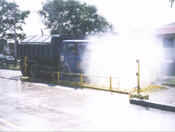
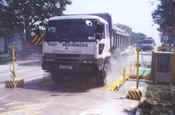
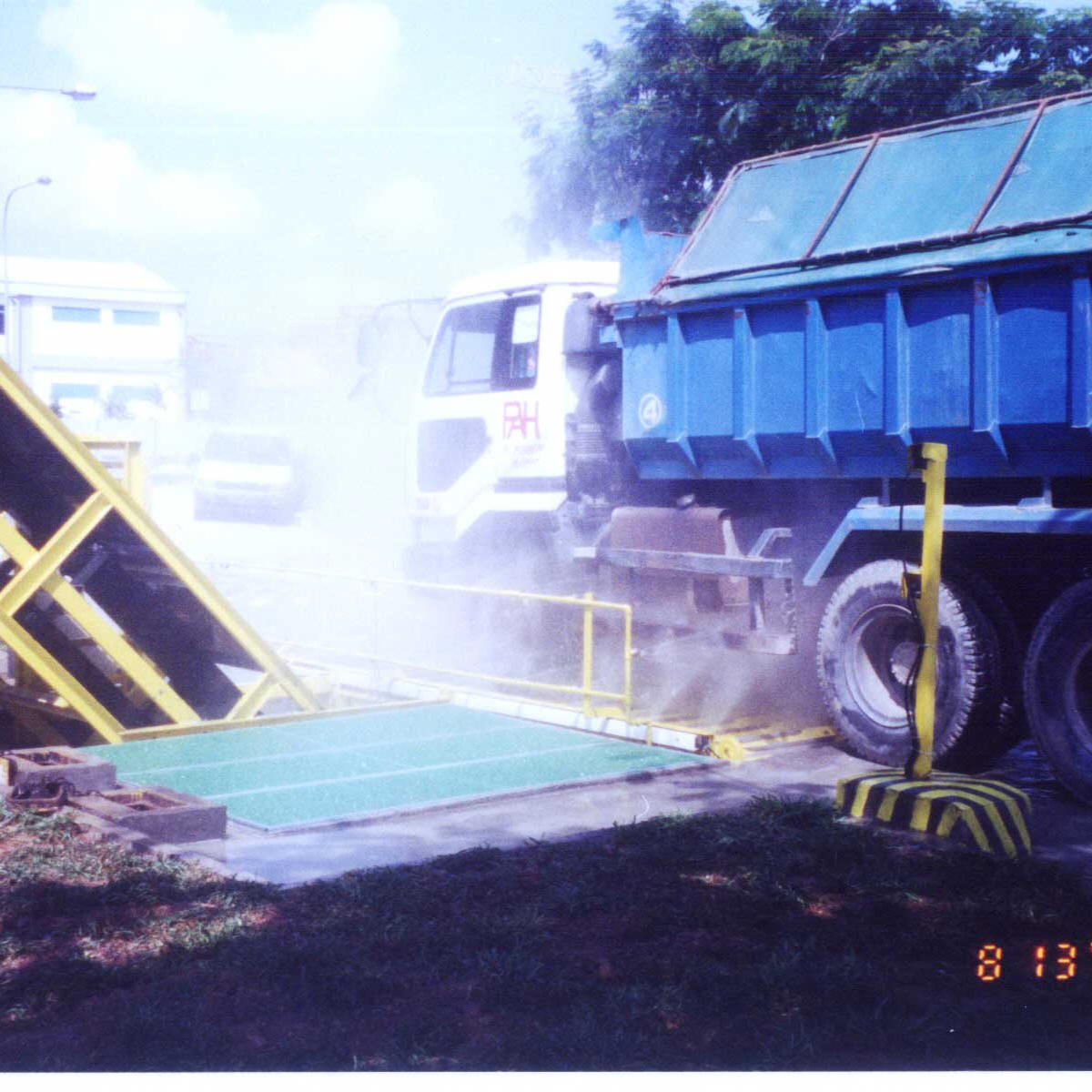
TYRE WASHING SYSTEM Located
at Tuas Aggregate Terminal for BCA (Building Control Authority)
in SingaporeComplete
with high volume pump, pulsation dampener, instruments
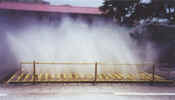
and weather proof control panel etc to discharge high velocity
impact spray instantaneously when truck triggers the
light sensor on entry to the skid washing bay. Depending on
the loading demand, a timer in the control panel facilitate
adjustment of washing period from 10 seconds to 300 seconds
for complete wash. High velocity impact nozzles are spaced
to surround the whole under carriage. Dirt and gravels are
collected on a rotating conveyor and continuously rolled out
for dumping. Waste water in the washing bay is cascaded into
a reticulation bay where the water is strained and filtered
to be re-use. The skid structure withstanding dynamic loading
of a 40 ton fully loaded dump truck, continuously transporting
sand, gravels and aggregate from Singapore one and only Government
owned aggregate disseminating point. TOTALLY AUTOMATIC
Wilson Engineering (S) Pte
Ltd - Singapore
Tel: +65 67741828 (Sales Hot-Line)
E-mail:
wilengin@gmail.com